
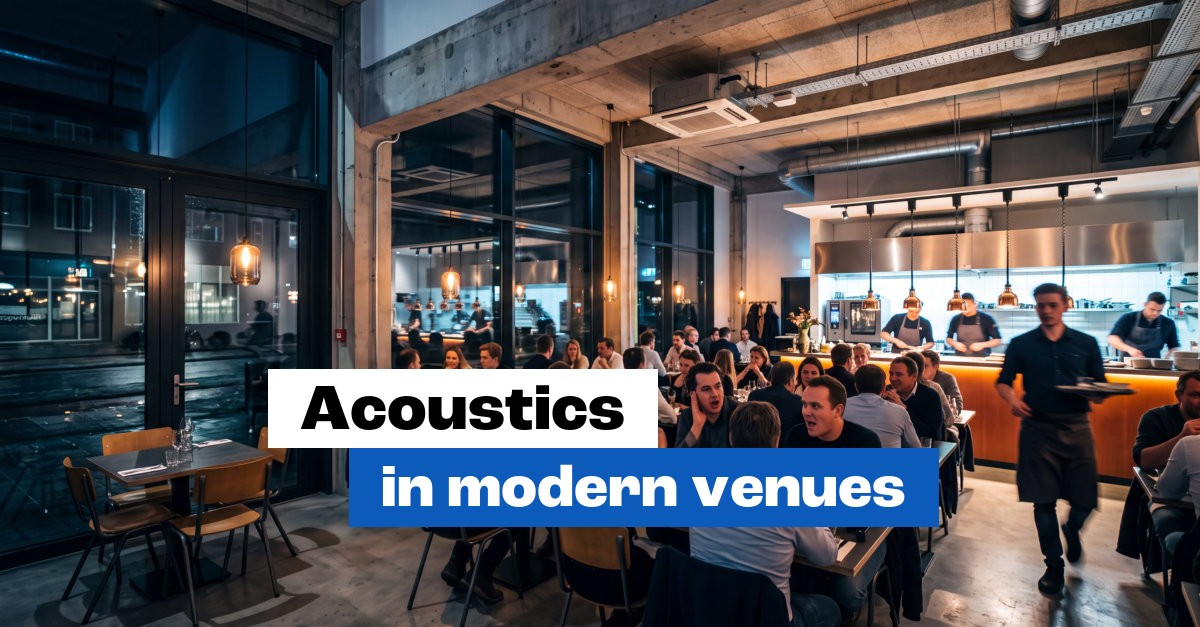
You know the feeling as a guest. You’re in a good-looking modern restaurant, the interior works, the food is right, and still you leave earlier than you meant to. You often don’t register the reason: you have to shout to be understood by the person across the table, and after an hour the sound has worn you out. That’s echo, and it costs you guests and revenue without anyone saying it out loud.
The annoying part is that the best-looking modern interiors sound the worst. The good news is that it can be fixed, as long as you tackle acoustics and sound together instead of separately.
Why modern venues echo
Clean design means hard materials. Concrete, glass, steel, an open kitchen, high ceilings, no curtains or carpet. It looks great, and acoustically it’s a disaster. Sound waves bounce off all those hard surfaces back into the room and pile up. The result is echo: voices, clattering crockery and music run into each other until it’s one hard mush.

In a room with soft materials, think of an old-fashioned café with a wooden floor, curtains and a low ceiling, sound gets absorbed. There you understand each other without effort. So echo is a direct result of how we build and furnish these days.
Absorb first, then amplify
The mistake we see most often: a venue has an echo problem and buys a louder sound system to get over it. That makes it worse. More sound in an echoing room means more echo. You turn up the volume and nobody understands each other any better.
The order that does work: fix the room first, then the sound. Acoustic absorption takes the edge off the echo, so voices and music stop tumbling over each other. After that you tune the sound system to a room that’s already calm, and you need far less volume for the same effect.
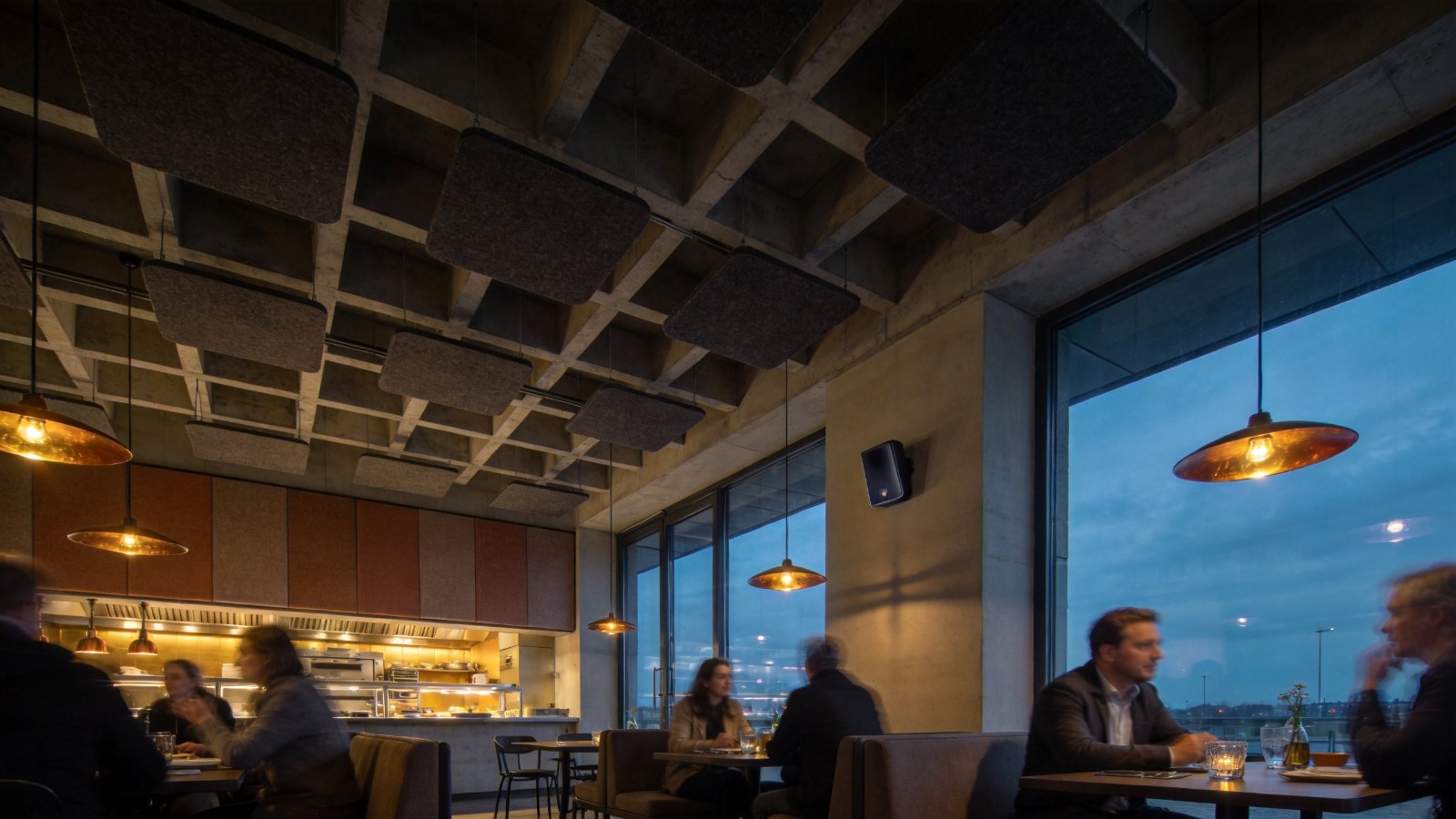
That’s why we treat acoustics and installation as one design. There’s little point hanging expensive speakers in a room that throws sound in every direction. If you work with several rooms, read how to run bar, dining room and terrace separately.
Absorption without wrecking your interior
The fear among a lot of owners and designers: acoustic measures will make my beautiful venue ugly. They don’t have to. Modern absorption comes in forms that blend into the design or even add something.
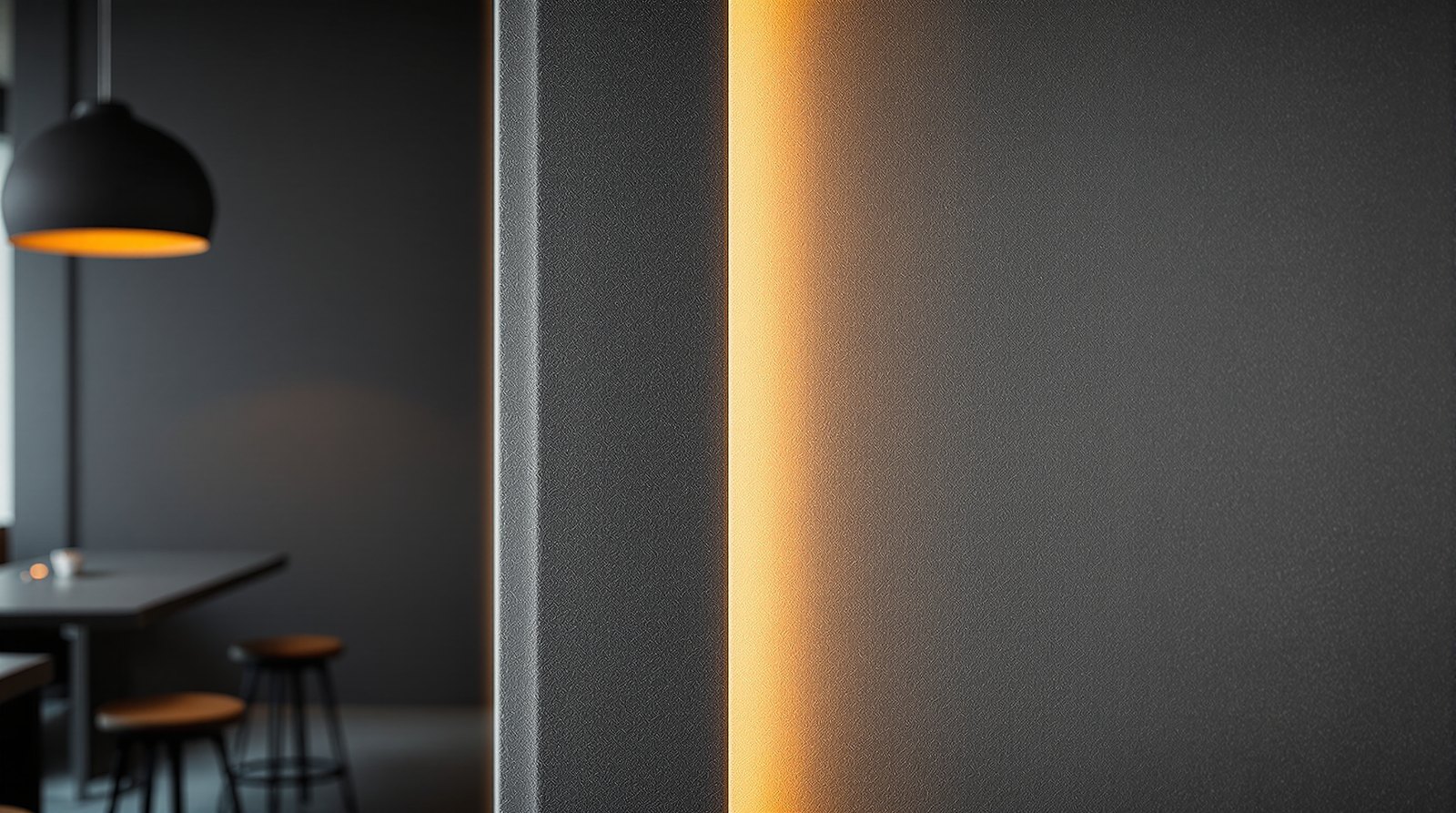
Acoustic panels can be built into the ceiling, sometimes invisibly behind a finish. There are island solutions you hang from the ceiling, which transform a room quickly and go up faster than a whole suspended ceiling. Wall panels can be covered in fabric or even a print, so they become part of your interior. And soft elements you’re considering anyway, like acoustic slats or planting, help too.
The point is that you don’t have to choose between a beautiful venue and a venue where people can hear each other. With a considered plan you get both.
What it gets you
Guests stay longer when they feel comfortable, and calm acoustics are a big part of that. They order more, come back more often and recommend your place. Research into how we experience food and drink, including work by Charles Spence at the University of Oxford, shows how strongly sound colours the experience of a space. For a hospitality venue that isn’t a detail, it goes straight to how guests experience your place and whether they return.
Start by listening to your room
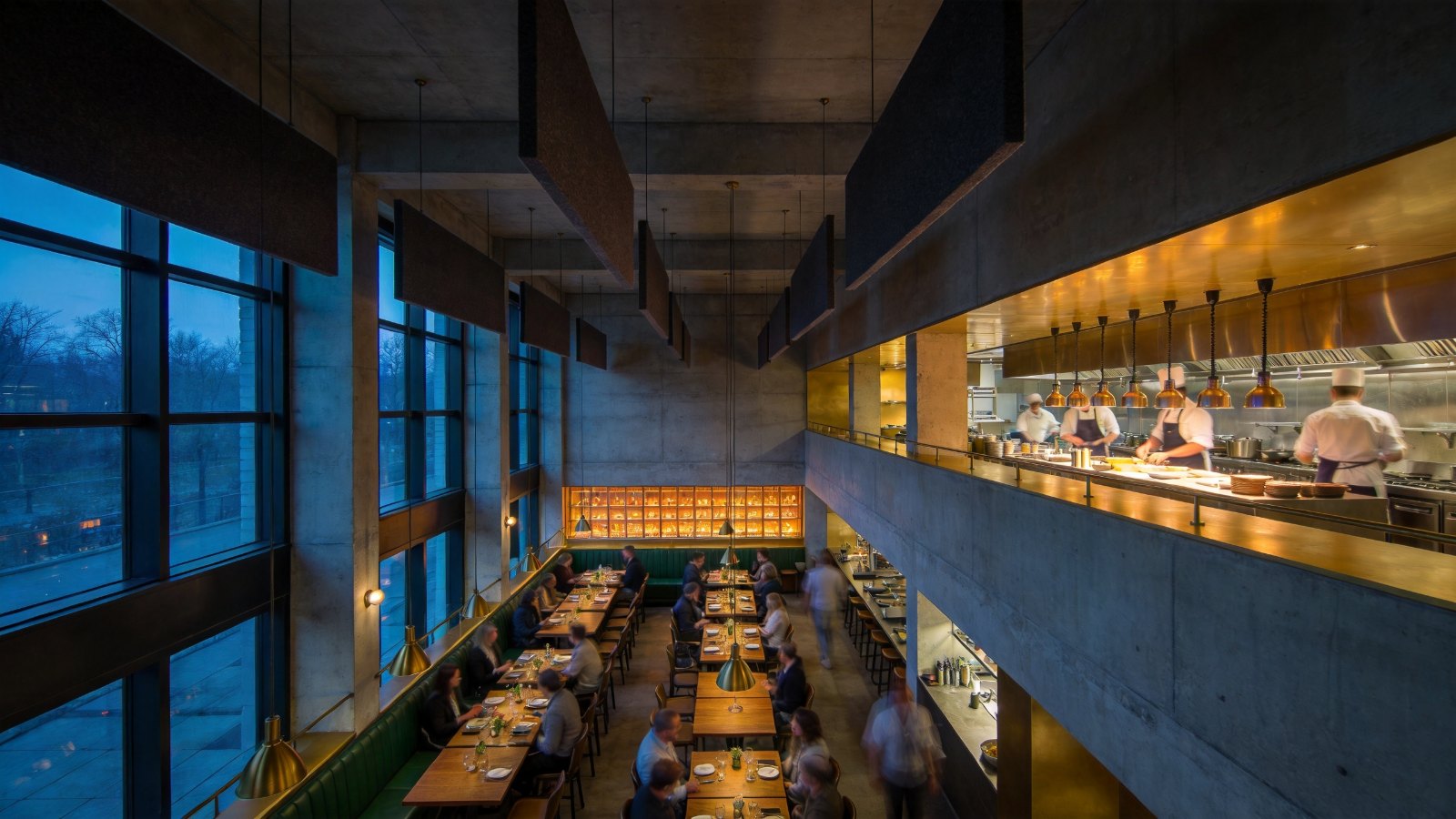
Every room echoes differently. Before we advise anything, we come by and listen to what your venue does. Where it bounces, where your guests sit, where the music sits, and how you use the room across the day. With that picture we put together a plan that combines acoustics and sound and fits your interior.
Struggling with echo, or building a new venue and want to get it right from the start? Have us come round. Call +31-(0)10-307 54 76 or email info@massivepro.nl, and we’ll look at your room together.
Frequently asked questions
Why does my modern restaurant echo so much?
Clean design uses hard materials like concrete, glass and steel, often with high ceilings and open kitchens. Those bounce sound back instead of absorbing it, which creates echo. Soft materials would dampen the sound.
Does a better sound system fix echo?
No, more sound in an echoing room makes it worse. You have to treat the room acoustically first and tune the sound system after that. Then you need less volume for a better result.
Will acoustic panels make my venue ugly?
Not if you choose them well. Panels can be built into the ceiling, hung as islands, or become part of your interior with fabric and prints. Acoustics and design can go together.
What goes up faster: a suspended ceiling or island solutions?
Island solutions hung from the ceiling transform a room quickly and are usually faster to install than a full suspended ceiling.
How do you start on an acoustic problem?
We come by and listen to what your room does: where it bounces, where guests sit and how you use the space. Based on that we put together a plan that combines acoustics and sound.